Historical marker to honor Tuskegee Airman, EIU alum Charles B. Hall
Aug-18-2026Campus ceremony August 25 will commemorate trailblazing EIU student-athlete and World War II hero
(Charleston, IL) — Eastern Illinois University students, employees and members of the public are invited to join the Coles County Historical Society at 4 p.m. Tuesday, August 25, for the unveiling of a historical marker honoring Major Charles B. Hall, a Tuskegee Airman and EIU alumnus who made history as the first African-American pilot to shoot down an enemy aircraft during World War II.
The ceremony will take place at the corner of Fourth Street and Garfield Avenue on the EIU campus, just north of Coleman Hall. The event will celebrate Hall's remarkable life and legacy while recognizing his historic connection to Eastern Illinois University and the Charleston community.
Hall enrolled at EIU in 1938 and became the university's first African-American student-athlete. A standout halfback, he competed in both football and track and helped lead the Panthers football team to a combined 9-6-1 record during the 1938 and 1939 seasons. EIU's University Archives identifies Hall as the first African-American athlete at Eastern.
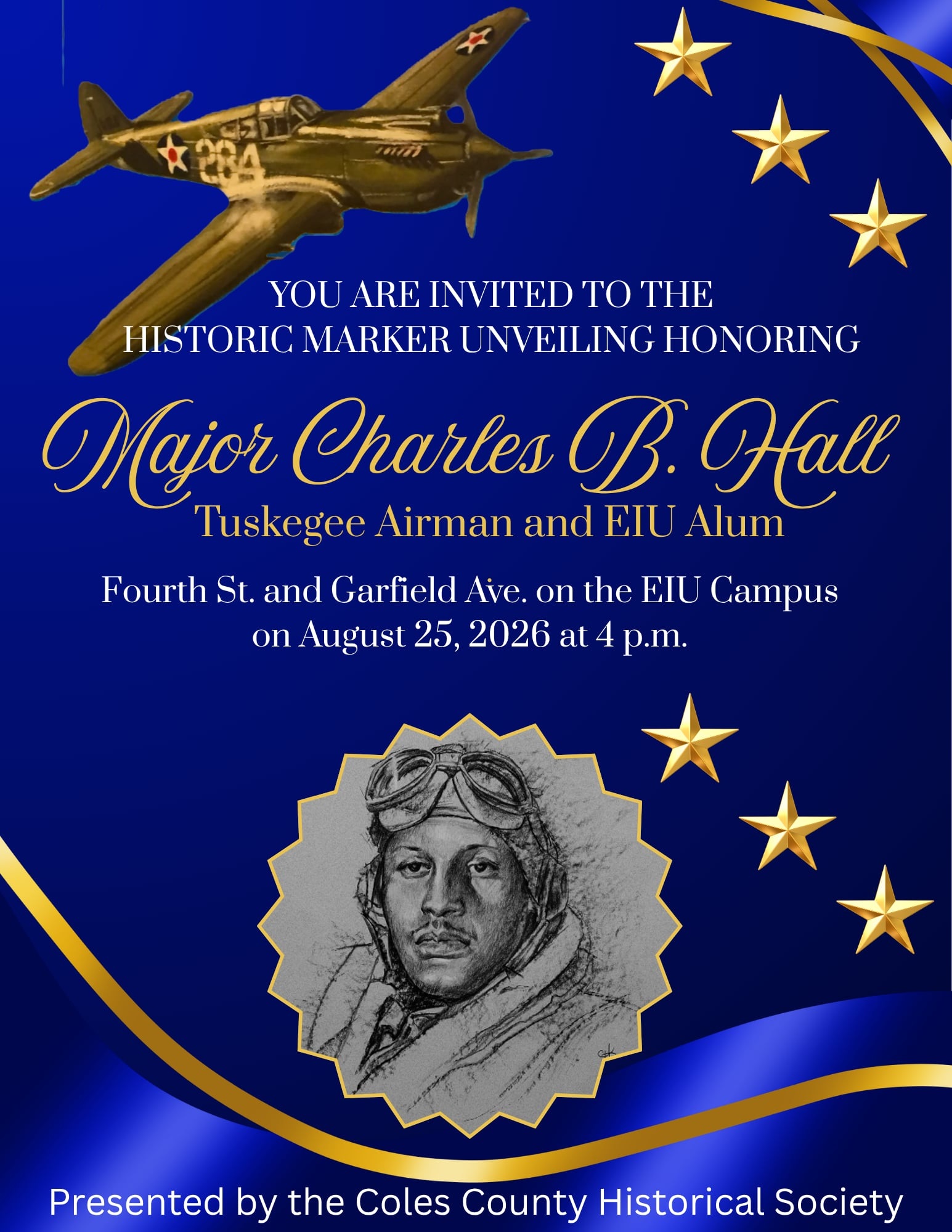
Hall left EIU to serve his country, joining the U.S. Army Air Corps in 1941. He received his pilot's wings at Tuskegee Army Air Field in Alabama on July 3, 1942, and became one of the pioneering pilots of the famed Tuskegee Airmen. On July 2, 1943, while serving with the 99th Pursuit Squadron over Sicily, then-Lt. Hall became the first African-American pilot in U.S. military history to shoot down an enemy aircraft. He went on to fly combat missions during World War II and ultimately earned the Distinguished Flying Cross, becoming the first African-American recipient of the prestigious military honor.
Hall's accomplishments extended well beyond the cockpit. Following his military service, he worked in Oklahoma City and later joined the Federal Aviation Administration. His achievements continued to be recognized throughout his lifetime and after his death in 1971, including through the naming of the Charles B. Hall Airpark at Tinker Air Force Base in Oklahoma City and a statue honoring him there.
At EIU, Hall's legacy has continued to receive recognition. He was posthumously selected as an EIU Distinguished Alumnus in 2017, and the university has highlighted his story through University Archives, Booth Library exhibits and other programs. EIU's alumni materials identify Hall as a notable alumnus and recognize his place in American military history.
The August 25 marker unveiling represents the latest effort to preserve and share Hall's story with future generations. The project grew from research conducted by Carolyn Cloyd, president of the Coles County Historical Society, and Charleston High School student Gunner Barr, who received an Untold Stories grant in 2024 to research Hall's life and legacy. A second grant awarded in 2025 supported continued work, including a documentary project in partnership with WEIU and installation of the historical marker on EIU's campus.
Hall's connection to EIU offers a particularly powerful reminder of the university's role in the lives of students who have gone on to make an impact far beyond campus. More than eight decades after Hall first arrived at Eastern, his story remains part of the university's history — not only because of what he accomplished in the skies over Europe, but because of the path he helped open for generations of students who followed.
EIU prepares students to accomplish their life goals through a combination of quality academics, personal relationships, and both on-campus and online learning opportunities. For more information about Eastern Illinois University, including its broad array of academic and career readiness programs, community-based services and opportunities, visit Eastern Illinois University or call EIU’s public information office at (217) 581-7400.
