

Finding Joy in the Fine Details: Jill Monroe’s Editorial Experience
by Ethan Miller
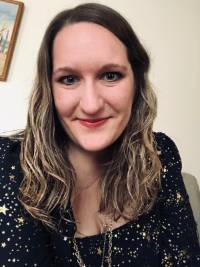 “If you produce one book, you will have done something wonderful in your life.”
In an interview about her work as a full-time editor, Jill Monroe shared this quote from former First Lady Jacqueline Kennedy to fully express her feelings.
“I couldn’t agree more,” Monroe said. “Whether it’s a book, article, or academic paper—helping to bring the written word to others is a very rewarding experience.”
Monroe is the Academic Editor for the Illinois State Geological Survey (ISGS) at the University of Illinois. Her work primarily consists of scientific and technical editing, but at a past job with Mayhaven Publishing, Monroe provided developmental editing for creative writers. For her, editing has always been a natural process.
“I would often critique mistakes and errors while reading for fun,” Monroe said. “One day, it dawned on me that I could get paid to do that.”
Once Monroe got involved with professional editing and publishing, she fell in love with it, finding joy in solving the puzzle of formatting and layout design that others might find tedious.
At the ISGS, Monroe’s workload is roughly 75% editing, with the other 25% including meetings, correspondence, and checking in on her geologist coworkers to ensure everyone meets their deadlines.
“When working on a team or multi-author projects, it can be frustrating getting everyone to send me their material on time,” Monroe said. “I often have to pester them to meet their deadlines in order for me to meet mine.”
These deadlines are important for keeping everyone on track, as manuscripts will often be sent between Monroe and their authors three or four times to ensure that every question is addressed. Luckily, this process is typically a smooth one at the ISGS.
“Perhaps due to the scientific nature of the material, I easily defer to the geologists on content matters,” Monroe said. “In turn, they trust me to make that content ‘readable’ and accessible to the layperson.”
In contrast, Monroe encountered more authorial resistance when she worked at Mayhaven.
“I think this is because authors can be particularly protective of their creative work,” Monroe says. “As the editor, I have more distance from the work, which can be beneficial since it makes me more willing to cut or rework parts of the text.” While most authors were accepting of her suggestions, Monroe would always listen to the opinions of adamant authors, often deferring to their judgment.
When editing, Monroe begins by figuring out which projects are falling behind and which are her highest priority. Once she knows what to work on, she checks the article’s content. By doing this, the biggest questions and concerns can be answered as soon as possible. Then, she moves on to copyediting and formatting.
Microsoft Word is frequently used at the ISGS, but for editing, Monroe prefers Quark. Most of her editing is done electronically with these programs, but she typically edited for Mayhaven on paper first, then finalized the edits digitally.
Since most editors Monroe knows are freelancers, she recommends that aspiring editors learn the skills of being patient, managing time wisely, and knowing what resources to consult.
“What makes a good editor isn’t necessarily knowing all the answers, but knowing where to look when you are unsure of something,” Monroe said. Additionally, Monroe believes it’s important to step outside of your comfort zone and learn about other areas of publishing.
Learning these skills, especially with the rise of AI text generators, is becoming increasingly important for editors who want to show their usefulness and marketability.
“What scares me a bit—and I saw this with the rise of self-publishing as well—is the idea that editors are not needed,” Monroe said. “However, I think people who are serious about the quality of their work do value the expertise of an editor.”
Closing off the interview, Monroe wanted to share a few final words with aspiring editors. “Know your worth. Advocate for yourself,” Monroe said. “You have put in the time and devotion to your craft, and you deserve to be appropriately compensated.”
Ethan Miller is a senior English major at EIU concentrating in creative and professional writing. In the future, he would like to become a published author and plans to complete a master's degree in creative writing.